Essay
Build the Ark; Prevent the Flood
What kind of a person does it take to save the world? One who is there and willing to do the work.
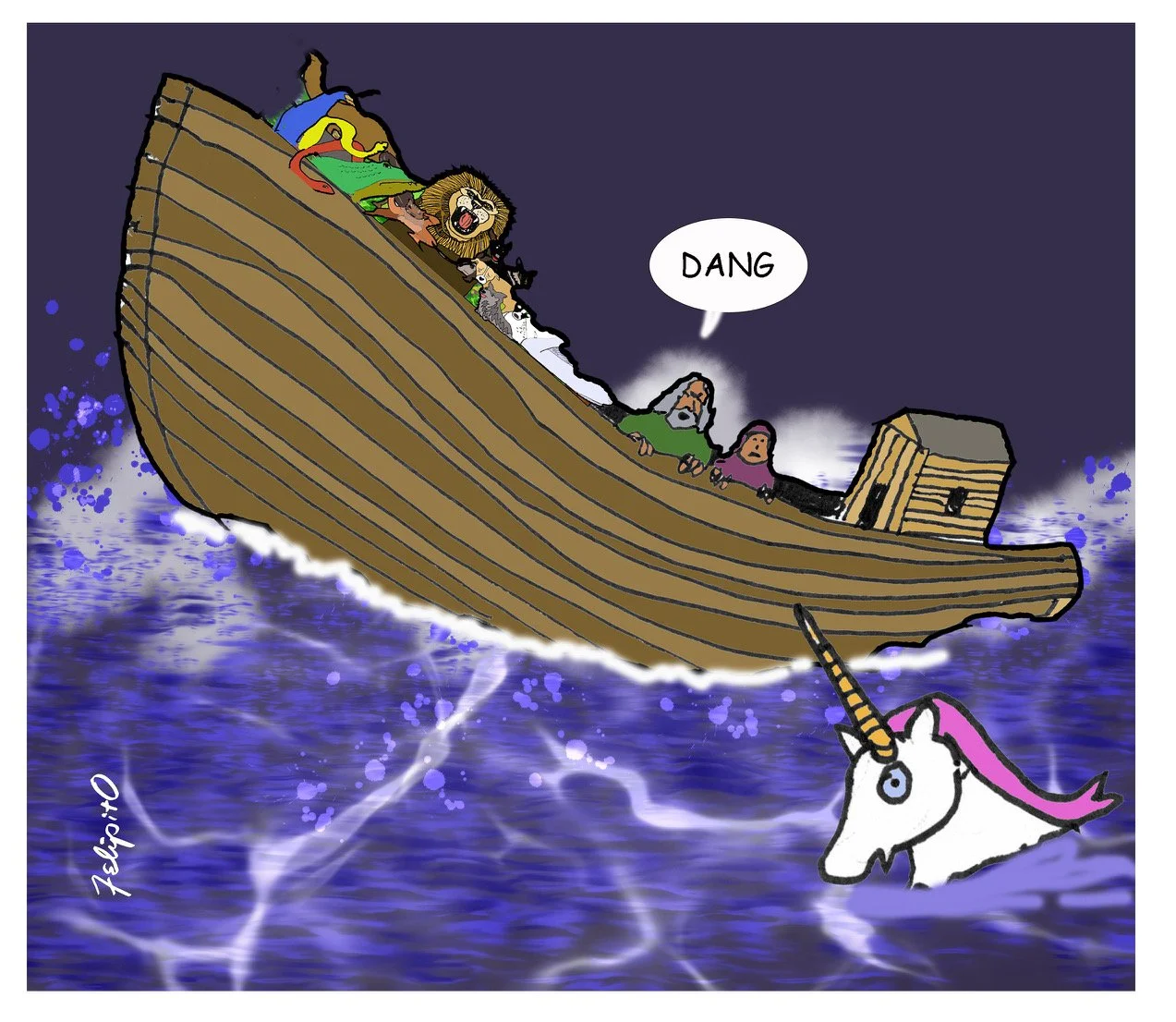
Charlie and I have been watching The Good Place because it’s leaving Netflix at the end of September, I guess to go into this generation’s equivalent of the Disney Vault.
We’re in the middle of Season 4, and it’s been revealed that life on Earth is so fraught that people can’t do even the simplest thing without wreaking terrible consequences that well outweigh any intended benefit.
The characters bring this problem to Maya Rudolph, the all-powerful Judge. Her solution? Destroy it all and try again. Send Earth back to its primordial stew days, and I’ll see y’all in about a billion years.
I mean, it’s not a terrible idea.
And The Good Place isn’t the first to come up with it.
A flood that destroys the world because the people are doing evil (or are being annoying, or for inscrutable reasons) is one of our earliest and most common stories, told in cultures all over the world.
Our version of it, Noah’s Ark, is told in Genesis. Then, it has been considered over and over by rabbis in Midrash through the millennia. In Midrash, rabbis imagine parts of the story that are missing, ask questions, and interpret the story for new generations. Sacred stories are kept alive and relevant by being retold and reconsidered.
In Noah’s story, God destroys the world because the people have been evil. The Message Bible describes it like this:
God saw that human evil was out of control. People thought evil, imagined evil--evil, evil, evil from morning to night. (Genesis 6: 5-7)
OK, that sounds terrible, but how evil are we talking? What kind of evil is worth destroying the world over? The rabbis have been thinking about that too. The Eco Bible quotes some Midrash:
The judgment was sealed because of the sin of lawlessness, robbery, or wrongdoing (Chamas). The rabbis of the Talmud teach that “a person would put out a market stall full of beans, and each person would come and take less than a penny’s worth so that they could not be prosecuted by the law.”
Rabbi Samson Raphael Hirsch teaches that “Chamas is a wrong that is too petty to be caught by human justice, but if committed continuously can gradually ruin your fellow person.”2
God saw evil in seemingly innocuous acts that when added up lead to real harm. Small selfish acts. Making exceptions to the rules for themselves. They were not trying to destroy the world, but in the end, they, like us, were all complicit in the evil of their time.
According to Genesis, Noah was a righteous man, blameless among the people of his time. Which, again, isn’t that high a standard, and, he doesn’t really come across as a great man. I mean when he finally gets off the boat, he gets pass out drunk and curses his son’s descendants to slavery. In The Good Place parlance, he sounds like a “Medium person.” He had his good days and bad days. He took care of business. Obeyed God. Saved his family. A good guy, but an angry drunk.
Maybe it doesn’t matter if Noah was great or righteous or complicit. No one suspects that God saved the most righteous green alligators or best-behaved long-necked geese. Just a couple of the ordinary ones who happened to be around at the time. Maybe Noah is on the boat with his wife and family for the same reason there are two of every other species. To save the species and start over.
Even if Noah and the animals on the Ark weren’t particularly outstanding as individuals prior to the flood, as the waters receded, they became special. Not because of who they were, but because of the world they found themselves in. The future of their species depended on them. And Noah had everything he needed to build a future: he was there, and he was willing to do the work. He was born for a time such as this.
Noah was definitely willing to work. God asked him to build an ark, and he obeyed.
In the Midrash, some of the rabbis think Noah tried to get people to change their ways. But, instead of repenting, the people made fun of him. The rabbis more or less seem to agree that Noah never argued with God, and he could have. He built an ark, but he didn’t ask God to maybe consider not destroying the earth.
This is where I see myself in Noah’s story. I’m willing. I’m doing my part. I try to convince others to live greener. But I haven’t spent much time at all speaking to the powers that be--demanding change of corporations and governments.
That might be how Noah felt. Doing his part, hassling his friends, but arguing with God was a bit too much. Maybe it was hard to find the words. Maybe he was intimidated. Maybe it felt dangerous to talk back to God.
Like Noah, we are relatively righteous and still complicit in the evil of our times. We know this evil will destroy our world. We’re regular people, here, at the right place at the right time.
And, just like Noah, we are called to courage. With the fate of the planet on the line, in a time when it seems dangerous to speak truth to power, we are called to find the words and the courage to demand change from powerful entities. We were born for a time such as this.
Rabbi Jonathan Sacks points out that “Noah's end - drunk, disheveled, an embarrassment to his children - eloquently tells us that if you save yourself while doing nothing to save the world, you do not even save yourself.”